

logo
Send Message
Home News

Case Hardness Depth to ISO 2639

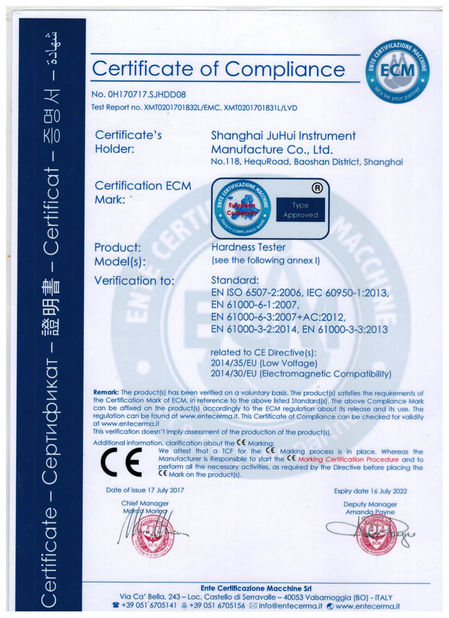
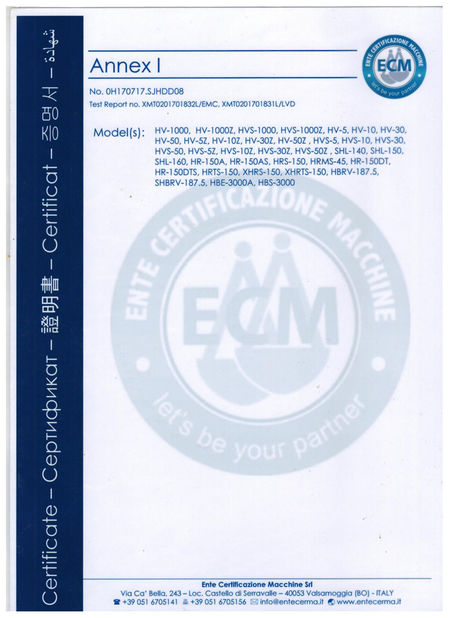
Certification
china Dongguan Quality Control Technology Co., Ltd. certification
Customer Reviews
The touch screen micro vickers hardness tester has been installed a few weeks ago, everything is OK. Thanks for your advice and excellent service.

—— Mr. David Chambers

Thanks for the fast delivery and our customer is very satisfied for the rockwell hardness tester, and hope more orders soon.

—— Neil Renato

After we visited the customer, they finally decided to purchase Brinell hardness tester iBrin-413Z, now we have installed the unit at customer’s site,

—— Fermin Lee

Thank you for the indenters (diamond  cone 120 degrees). We recently got it and already tested it. Indenters  are good as we expected. 

—— Dalius Skinulis

The Measurements are good for Brinell Tester HBST-3000.

—— Sun Chull Kim

Hey, the hardness tester iVick-484ST was installed last week and works well, thanks for the professional support.

—— Sabinian Smith

I am glad to inform you that the installation of the SHB-3000C Brinell hardness tester has been finished successfully. I would like to thank you!

—— Robbin

I'm Online Chat Now
Company News
Case Hardness Depth to ISO 2639
Latest company news about Case Hardness Depth to ISO 2639


Case Hardness Depth to ISO 2639


Case-hardened components are heat-treated steel workpieces. Here the workpiece is carburized, hardened, then tempered. This produces a hard, wear-resistant surface, while the core remains relatively soft and tough.


Determination of the case hardness depth CHD is described in the ISO 2639 standard.


Case hardening is used on non-hardenable steels. Carburizing with a carburizing medium (e.g. gas or packing into carbon granulate) at a temperature of 850-950 °C, enriches the surface layer with carbon atoms.


These diffuse from the enriched surface layer into the core. The result is a noticeably decreasing carbon profile from the surface to the core. Next the workpiece is hardened.


This produces a deliberate change and conversion of the structure in accordance with the amount of carbon in the surface layer. After hardening, the workpiece is tempered in order to increase toughness and relieve internal stress.


Case Hardness Depth Determination


  • Hardness indents are applied at precisely defined distances, see illustration. The test method to be used can be either Vickers or Knoop with a test force between 0.98 - 9.8 N.


  • The case hardness depth (CHD) is derived from the curve representing the hardness as a function of the distance from the edge of the specimen surface (edge distance) by measuring the edge distance up to a limit hardness of 550 HV or the corresponding Knoop hardness value.
     
Pub Time : 2026-01-05 19:17:54 >> News list
Contact Details
Dongguan Quality Control Technology Co., Ltd.

Contact Person: Mr. Raymond Chung

Tel: 86-13711988687

Fax: 86-769-22784276

Send your inquiry directly to us (0 / 3000)